Commentary by young IRMO researches on Energy union published

Commentary by young IRMO researches on Energy union published

Energy union and climate: we will always have Paris is the eight commentary within the project POLO-Cro28, written by Anastasya Raditya Ležaić. EU ratification of the Paris Agreement in October 2016 enables its entering into force, making thus the EU’s climate ambitions into the climate actions. This commentary analyses the role of the Paris Agreement in Croatia and selected EU member states in the implementation of the Energy union i.e. its goal to decarbonise the economy.

Energy union and climate: we will always have Paris

EUROPEAN SEMESTER AUTUMN PACKAGE 2017: WORKING FOR A STRONGER AND MORE INCLUSIVE ECONOMIC RECOVERY HAS BEEN PUBLISHED

EUROPEAN SEMESTER AUTUMN PACKAGE 2017: WORKING FOR A STRONGER AND MORE INCLUSIVE ECONOMIC RECOVERY HAS BEEN PUBLISHED

The European Commission has published the 2017 Annual Growth Survey, which also officially marks the beginning of the process of 2017 European Semester. The Commission calls on Member States to redouble their efforts along the principles of the “virtuous triangle” of boosting investment, pursuing structural reforms and ensuring responsible fiscal policies, and in doing so, to put the focus on social fairness and delivering more inclusive growth. In addition to the 2017 Annual Growth Survey, following set of documents have been published: Communication on the euro area’s fiscal stance, a recommendation on the economic policy of the euro area, as well as a thorough analysis of economic, labour market and social conditions. The Commission is also issuing its Opinions on the Draft Budgetary Plans of euro area Member States for 2017.

more information:

http://europa.eu/rapid/press-release_IP-16-3664_en.htm

Presentation of the PONT – Career Skills Training held in IRMO for the IRMO research team implementing project POLO-Cro28 – Policy Observatory in Croatia

Presentation of the PONT – Career Skills Training held in IRMO for the IRMO research team implementing project POLO-Cro28 – Policy Observatory in Croatia

Institute for development and international relations – IRMO

4th November 2016, 11.00 – 12.00

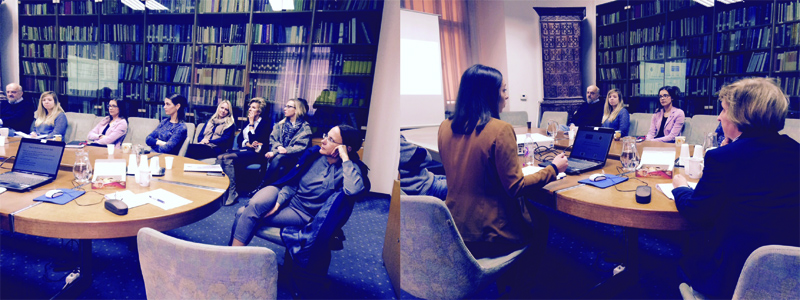
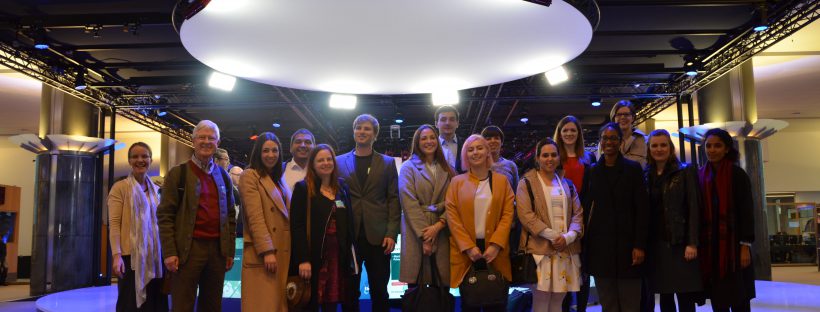
An informative presentation on PONT – Career Skills Training was held on 4th November, 2016 at the Institute for development and international relations – IRMO. The PONT – Career Skills Training was organized by The Trans European Policy Studies Association – TEPSA in the framework of the Professional Training on EU Affairs – PONT project, co-funded by the ERASMUS+/Jean Monnet Programme Support to Institutions. The training took place in Brussels, October 17-21, 2016. IRMO researcher and PONT Training participant Ivana Skazlić has presented main insights and shared the knowledge and experiences she gained during the program related to the topics of writing of policy bfriefs and press releasses as well as interviewing the policy-makers. Presentation was intended to young IRMO researches who are writing short analytical commentatires in the framework of the POLO-Cro28 project, co-funded by the ERASMUS+/Jean Monnet Programme Support to Institutions, currently being implemented by IRMO. In addition, the presentation was also attended by POLO-Cro28 project’s mentors from IRMO and other IRMO researches.

The Paris Agreement on climate change enters into force

The Paris Agreement on climate change enters into force

On 4th November 2016, the Paris Agreement entered into force. This is the first-ever universal, legally binding global climate deal in the history. The Paris Agreement’s central aim is to keep a global temperature rise below 2 degrees Celsius above pre-industrial levels.
More information on Paris Agreement: http://unfccc.int/paris_agreement/items/9485.php

Commentary by young IRMO researches on regional policy

Commentary by young IRMO researches on regional policy

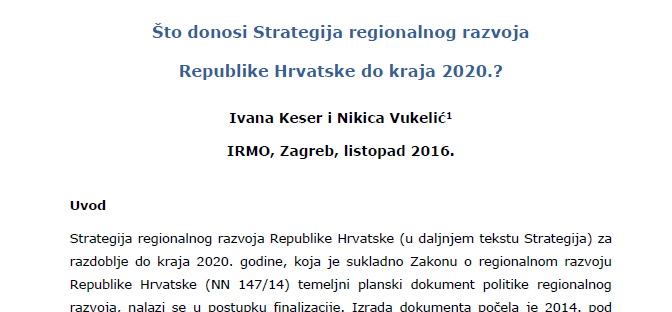
„What does the Strategy for the Regional Development of Republic of Croatia by the end of 2020 bring“ is the seventh analitical commentary by Ivana Keser and Nikica Vukelić, prepared under the POLO-Cro28 project. The commentary analyses the process of creating a basic planning document on regional development policy, examines the methodology utilized during its preparation, and provides an analysis of  challenges that lie ahead in the Strategy implementation by 2020.

“The European dimension of the employment policy in Croatia – how to decrease youth unemployment?” – the round table within the POLO-Cro28 – Policy Observatory in Croatia Jean Monnet support to institutions project held in Osijek

“The European dimension of the employment policy in Croatia – how to decrease youth unemployment?” –  the round table  within the POLO-Cro28 – Policy Observatory in Croatia Jean Monnet support to institutions project held in Osijek

Osijek: Josip Juraj Strossmayer University of Osijek

28th October 2016, 10.00 – 13.00

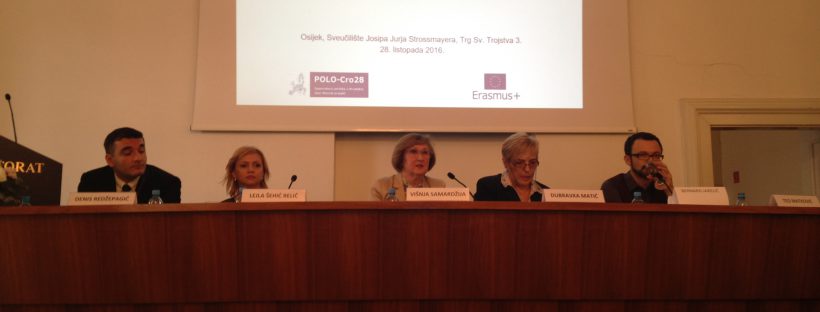
A round table “The European dimension of the employment policy in Croatia – how to decrease youth unemployment?” was held on 28th October 2016 in the hall of the Rectorate of Josip Juraj Strossmayer University in Osijek in cooperation with the European Commission Representation in the Republic of Croatia and Josip Juraj Strossmayer University of Osijek. The round table was organised within the Jean Monnet support to institutions project ‘POLO-Cro28 – Policy Observatory in Croatia’ financed by the Erasmus+ program and implemented by Institute for Development and International Relations – IRMO. The event was officially opened by Mrs Višnja Samardžija, the coordinator of the project from IRMO and moderator of the event, Mr Mario Vinković, Vice-Rector for teaching and students from University of Osijek and Mr. Denis Redžepagić, representative of the European Commission Representation in the Republic of Croatia (on behalf of the European Commission). The event proceeded with the panel, discussing trends and initiatives of the employment policies in the EU and Croatia, notably the effectiveness of the Youth Guarantee initiative, launched by the EU, and its implementation in Croatia. Furthermore, the panel discussed harmonisation of the education system with the labour market needs and transition paths from the education to work as well as the importance and the role of the informal education and volunteering engagement of the youth in the society. The distinguished speakers of the panel were: Mr Denis Redžepagić, the European Commission Representation in the Republic of Croatia; Mrs Dubravka Matić, Ministry of labour and pension system of the Republic of Croatia; Mr. Teo Matković, the Faculty of Law of the University of Zagreb; Mr. Mario Vinković, the Faculty of Law of the University of Osijek; Mr. Bernard Jakelić, Croatian Emloyers’ Association and Mrs Lejla Šehić Relić, Volunteer center Osijek. The panel was concluded with a Q&A sessions between the speakers and the audience.
Young IRMO researcher participated in the PONT career skills training in Brussels

Young IRMO researcher Ivana Skazlić participated in the PONT career skills training, taking place in Brussels, 17-21 October 2016. A 5-day intensive training was organized by TEPSA in the framework of the Professional Training on EU Affairs – PONT project, co-funded by the ERASMUS+/Jean Monnet Programme Support to Institutions. The training enabeld 15 recent graduates, PhD students and young researches to identify, acquire and improve important professional skills such as communication and presentation, policy advice and networking. Interactive sessions with high level professionals from think-thanks, academia and EU institutions provided participants with first-hand insights into different professional fields and introduced them to Brussels arena.

More information: “PONT – Professional Training on EU Affairs

Croatia moderately improved its position in global competitiveness ranking

Croatia moderately improved its position in global competitiveness ranking

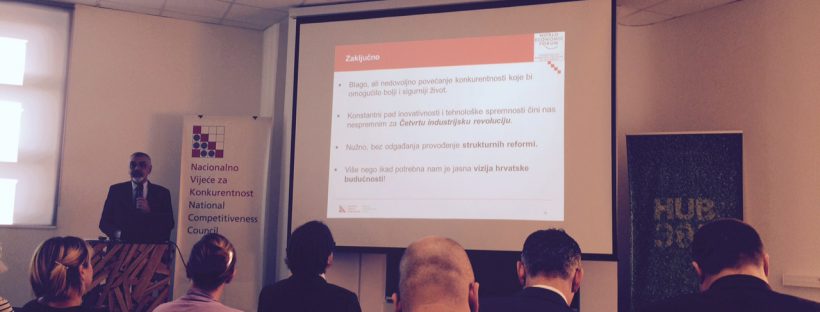
The National Competitiveness Council (NCC) presented the results of the 2016-2017 Global Competitiveness Report on September 28, 2016 in Zagreb. According to the results, Croatia is in 74th place out of 138 world economies. With an average score of 4,15, this ranking is an improvement of three places from its position in 2015. The president of the NCC, Ivica Mudrinic, has highlighted the fact that Croatia made progress in several key areas, including the macroeconomic pillar thanks to the decrease in public debt and deficit and there are signs of improvements in the labour market, commodity markets and increase in exports. However, there are also worrying trends of continuous decline in innovations, technological readiness and financial market development. Hence, besides the need of implementing reforms, Croatia also needs a clear vision of its future. Of the countries with which Croatia compares itself, Slovenia, Slovakia, Poland, Bulgaria and Serbia recorded improvements, while FRYOM, Romania, Greece, Hungary and Montenegro registered a decline in the rankings.

More information: http://www.konkurentnost.hr/Default.aspx?art=598&sec=2

Commentary by young IRMO researches on water management policy

Water management challenges in Croatia and Slovakia in the period 2014-2020‘ is the sixth commentary within the project POLO-Cro28, written by Martina Funduk, senior research assistant at IRMO. This commentary analyses experiences of Croatia and Slovakia in implementation of EU water management legislation and identifies main challenges in the forthcoming period. The paper provides an overview of the conditions of water resources in these two EU member states and envisaged investment in their water management systems by 2020.

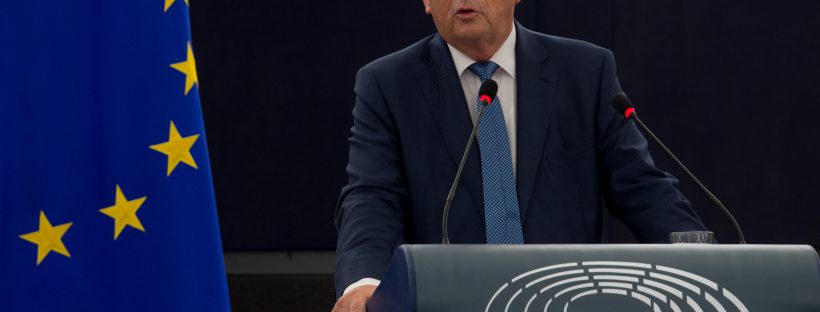
The President of the European Commission Juncker delivered his State of the Union 2016 speech before the European Parliament

Every year in September, the President of the European Commission delivers his State of the Union speech before the European Parliament, taking stock of achievements of the past year and presenting priorities for the year ahead. Among other important EU topics and priorities, the President Juncker has also emphasised several policy areas being monitored and analysed in the framework of the POLO-Cro28 project. This includes his remarks on youth unemployment, stressing the need of greater EU support in investing in its youth by the EU Youth Guarantee and Erasmus/Erasmus+ programmes. As regards to the environmental and climate protection, Juncker has reminded that Europeans are the world leaders on climate action and called all Member States to ratify the Paris agreement as soon as possible. Also, Juncker commented on Stability and Growth Pact by pointing out the need to implement this mechanism responsibly and with flexibility in order to support and not punish ongoing reform efforts.
More information: http://ec.europa.eu/priorities/state-union-2016_en